
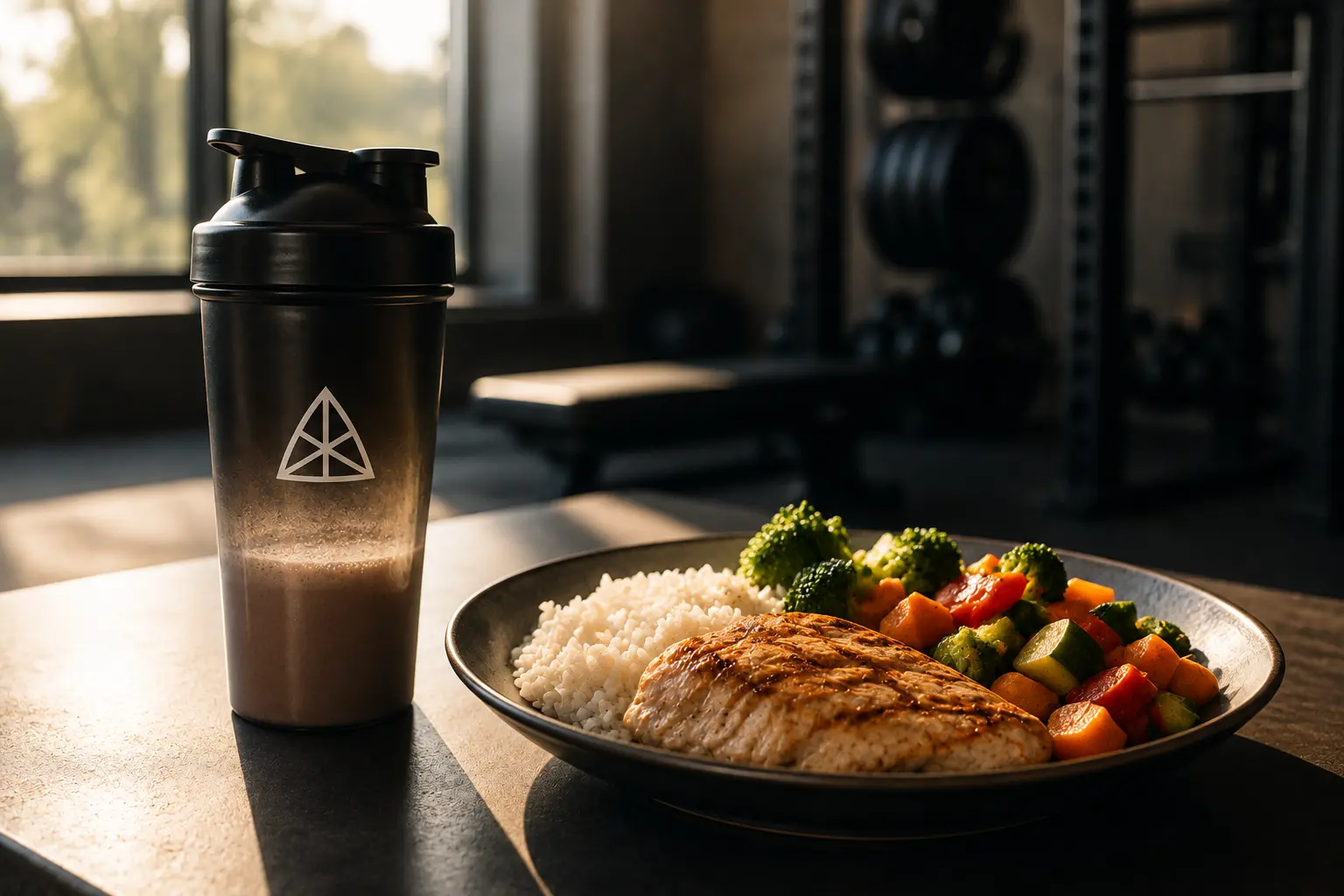
Finish a set, and the advice kicks in immediately. Get protein in within 30 minutes, or the session was wasted. Generations of gym-goers have sprinted from the squat rack to a shaker bottle believing exactly this. The research behind that belief has moved on. This article covers what actually drives muscle growth from protein intake. It covers why the timing panic is misplaced, and where timing still earns a small amount of genuine attention.
Where the 30-Minute Window Came From
The anabolic window idea has a real scientific origin. Early research in the 1990s and 2000s found muscle protein synthesis rises after resistance training. Consuming protein soon afterward appeared to amplify that rise. Researchers reasonably concluded a short post-workout period was uniquely primed for nutrient uptake.
The idea spread fast and got compressed along the way. A nuanced finding about elevated protein synthesis became a rigid rule: eat within 30 minutes or lose your gains. That compressed version is what stuck in gym culture for two decades. It’s also the part more recent research doesn’t support.
What the Newer Research Shows
A 2013 meta-analysis in the Journal of the International Society of Sports Nutrition looked directly at this question. It found total daily protein intake mattered more for muscle hypertrophy than the timing of any single dose. The International Society of Sports Nutrition’s 2017 position stand confirmed and extended this. Muscle protein synthesis stays elevated for up to 24 hours after training. The effect is strongest in the first four to six hours, not the first 30 minutes.
One trial studied trained men eating an identical protein meal either immediately after training or two hours later. The muscle protein synthesis response was nearly identical between the two conditions. A separate analysis controlled for total daily protein intake. It then varied how that protein was distributed across meals. Distribution made almost no difference to muscle growth over an eight-week training block. What mattered was the daily total, not when it arrived.
The Number That Matters
If timing isn’t the lever, total daily intake is. A 2018 meta-analysis covering 49 studies and 1,863 participants confirmed this. Protein supplementation meaningfully increases muscle mass and strength, particularly in trained individuals, once total intake reaches an adequate level.
The commonly cited threshold for maximizing hypertrophy sits around 1.6 grams per kilogram of body weight daily. Intakes above this threshold haven’t shown consistent further benefit for muscle mass or strength. This is the number worth tracking closely. It matters far more than whether a shake gets consumed at minute 20 or minute 90 after a session.
Where Timing Still Earns a Small Amount of Attention
None of this means distribution is completely irrelevant, only that its effect is modest compared to the daily total. Research on meal distribution has found a small benefit to spreading protein across four to five roughly even feedings. That beats concentrating it into one or two large meals. One study found a higher ratio of morning protein intake, relative to the day’s total, correlated with better muscle mass and grip strength.
Pre-sleep protein intake has its own small evidence base. Protein consumed before sleep is digested and absorbed overnight. Research has found this can meaningfully support the muscle’s adaptive response to an earlier training session. None of these findings approach the old anabolic-window urgency. They’re better described as modest optimization on top of an adequate daily total. Not a requirement without which progress stalls.
When Timing Does Matter More
There’s one genuine exception worth naming. If a session happens in a fasted state, with no protein consumed in the hours before training, the case for eating protein reasonably soon afterward strengthens. Muscle protein synthesis has less circulating amino acid supply to draw on in that scenario. Getting a dose in within a couple hours becomes more relevant than for someone who ate two to four hours pre-training.
For most people training in a normally fed state, with a meal containing protein somewhere in the hours before a session, the urgency simply isn’t there. The amino acids from that earlier meal are still being digested and used during and after the workout.
What This Means in Practice
Hit a daily protein total around 1.6 grams per kilogram of body weight. Spread it reasonably across three to five meals rather than cramming it into one. Stop treating the post-workout window as a ticking clock. A shake eaten at minute 15 and one eaten at minute 90 will produce essentially the same outcome for almost everyone, almost all the time.
The exception is training in a genuinely fasted state. Getting protein in within a couple hours afterward is a reasonable precaution there, not an overreaction. For everyone else, consistency across the whole day is the actual lever. Precision to the minute never was.
References
- Schoenfeld BJ, Aragon AA, Krieger JW. The effect of protein timing on muscle strength and hypertrophy: a meta-analysis. J Int Soc Sports Nutr. 2013;10:53. DOI: 10.1186/1550-2783-10-53
- Jäger R, Kerksick CM, Campbell BI, et al. International Society of Sports Nutrition position stand: protein and exercise. J Int Soc Sports Nutr. 2017;14:20. DOI: 10.1186/s12970-017-0177-8
- Morton RW, Murphy KT, McKellar SR, et al. A systematic review, meta-analysis and meta-regression of the effect of protein supplementation on resistance training-induced gains in muscle mass and strength in healthy adults. Br J Sports Med. 2018;52(6):376-384.
- Timing matters? The effects of two different timing of high protein diets on body composition, muscular performance, and biochemical markers in resistance-trained males. Front Nutr. 2024. DOI: 10.3389/fnut.2024.1397090
- Snijders T, Res PT, Smeets JSJ, et al. Protein ingestion before sleep increases muscle mass and strength gains during prolonged resistance-type exercise training in healthy young men. J Nutr. 2015;145(6):1178-1184.
Leave a Reply
You must be logged in to post a comment.