
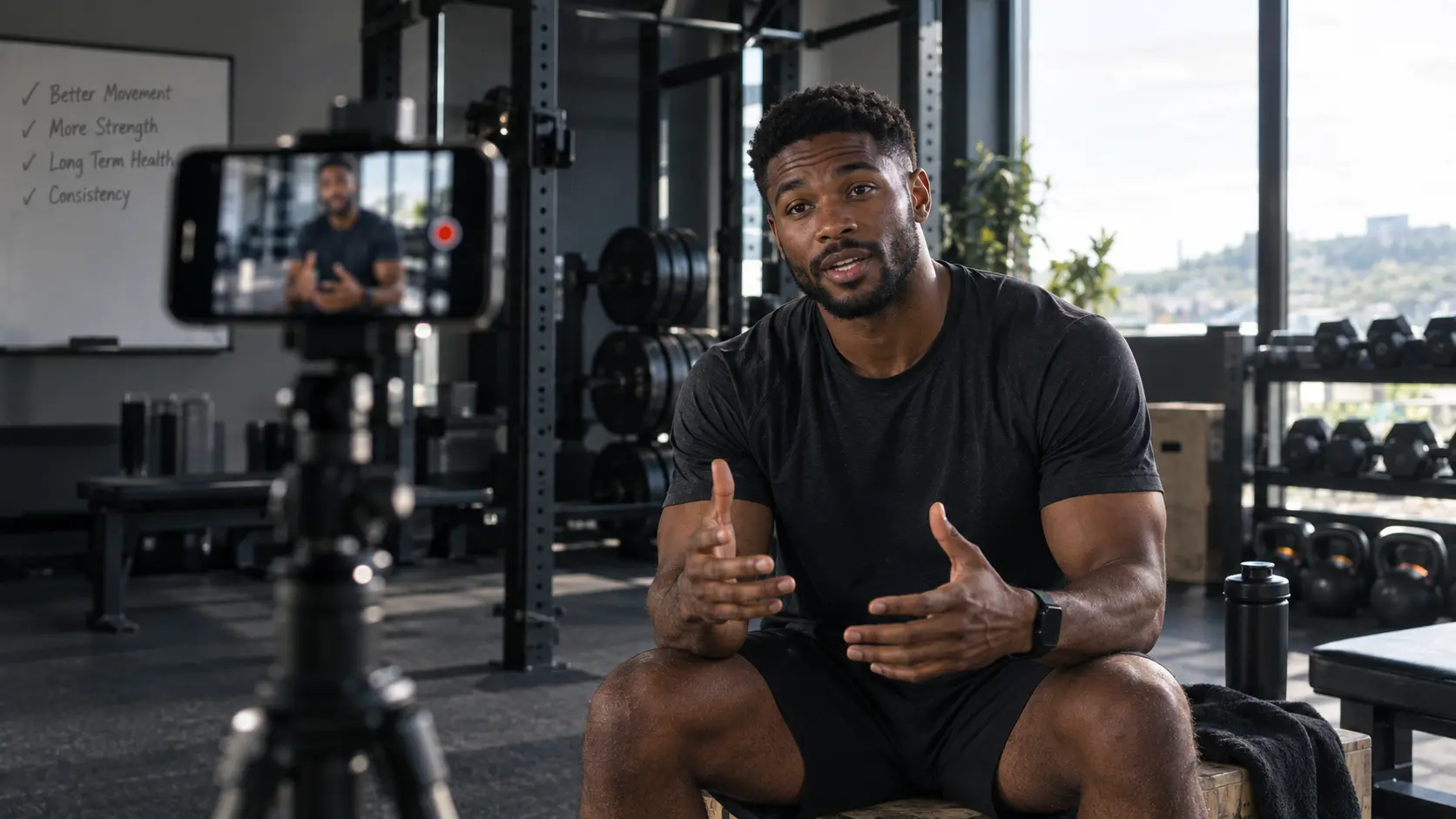
A prospective client scrolls a coach’s Instagram before booking a single call. Follower count, video quality, and on-camera confidence now shape a first impression more than a certification ever will. Building a content presence has quietly become close to mandatory for client acquisition. Almost nobody has stopped to ask the obvious follow-up question. Does a large audience track with coaching quality, or has discovery simply moved to a channel where quality was never the thing being measured? This article covers what the evidence shows.
The New Baseline Expectation
Industry guidance for coaches is now unambiguous about where discovery happens. Current advice consistently frames social media as the primary channel through which potential clients find and vet a coach before ever reaching out. Platform choice, posting consistency, and content pillars are treated as core business infrastructure, not an optional extra.
This represents a genuine shift from a decade ago. A coach’s reputation used to be built primarily through referrals, gym-floor visibility, and word of mouth. None of those channels have disappeared. They have simply been joined, and in many cases overtaken, by a channel with very different incentives. An algorithm decides what gets seen, and the algorithm was not built to reward accuracy.
What Gets Rewarded
The structural problem is straightforward once stated plainly. Social platforms optimize for engagement, watch time, and shareability. None of these signals require a claim to be correct. A confidently delivered, visually polished piece of fitness misinformation can outperform a careful, accurate, appropriately hedged explanation of the same topic. The platform is measuring attention, not truth.
This is not a hypothetical concern. A 2025 systematic review in JMIR Infodemiology pooled 33 separate studies specifically examining physical activity misinformation on social media. This places it alongside vaccines, nutrition, and cancer as a documented, actively studied misinformation category. The scale of the problem is not in question among researchers who study this directly.
What the Data Shows About Large Accounts
The most direct evidence available speaks specifically to whether a large following correlates with accurate content. The answer is a clear no. An analysis of Brazilian Instagram health and fitness accounts, every one with over 100,000 followers, scored average content quality at just 38.79 percent. Only 2.7 percent of posts cited any reference for the claims being made.
A separate, similarly structured analysis of large fitness Instagram accounts, again restricted to profiles with 100,000-plus followers, found close to the identical pattern. Quality scores below 40 percent, and roughly 3 percent citation rates. A study evaluating more than 480 fitness influencers found fewer than 20 percent held any formal credentials at all. Across every study measuring this directly, audience size has not been the variable separating accurate content from inaccurate content. If anything, the size of an audience appears almost entirely disconnected from it.
A Distinction Worth Being Precise About
It is worth being exact about what this research does and does not establish. It answers a specific question clearly: whether a large social media following correlates with accurate, well-referenced content. It does not directly answer a related but distinct question. Whether a coach’s follower count correlates with the actual outcomes their paying clients achieve.
That second claim is a reasonable inference from the first. A coach whose public content is inaccurate is plausibly applying similarly unreliable judgment in private client work. But it has not been measured directly in the research reviewed here. The honest position is that content accuracy and audience size are clearly decoupled. Coaching outcomes are a separate variable this specific body of evidence does not directly speak to. Conflating the two overstates what the data supports.
Why This Creates a Genuine Bind for Good Coaches
This puts a coach who prioritizes accuracy over engagement in a real structural disadvantage. Careful, appropriately hedged, evidence-based content is often less shareable than a confident, oversimplified claim. Nuance is harder to compress into a 30-second clip than certainty is. A coach unwilling to overstate a claim for the sake of watch time is competing on unequal terms against one who is.
This is not an argument for abandoning content creation, which remains a real and often necessary discovery channel. It is a reason to be clear-eyed about what content performance measures. A large following demonstrates an ability to produce engaging content. On its own, it does not demonstrate coaching competence. Treating the two as interchangeable is exactly the confusion the research consistently finds no support for.
What This Means in Practice
For a coach building a content presence, the practical takeaway is not to abandon the channel. Discovery genuinely has moved there and largely stayed. It is to hold two separate standards at once. Content quality, judged by engagement and reach. Coaching quality, judged by client outcomes, retention, and accuracy. Success in the first should never substitute for evidence in the second.
For a prospective client evaluating a coach, the research suggests follower count and content polish are close to meaningless as a quality signal alone. Credentials, specific outcome evidence, and the accuracy of what a coach says remain the more reliable indicators. Not how confidently or attractively they say it.
References
- Is social media spreading misinformation on exercise and health in Brazil? PMC8618405. 2021.
- Physical activity misinformation on social media: systematic review. JMIR Infodemiology. 2025. DOI: 10.2196/62760
- Should you trust fitness influencers? Abs are not a medical degree. Men’s Fitness. 2026.
- The dangers of fitness misinformation: how social media influencers are replacing experts. Dailyhealthways. 2024.
- Analysing credibility of UK social media influencers’ weight-management blogs: a pilot study. PMC7731114. 2020.
Leave a Reply
You must be logged in to post a comment.