
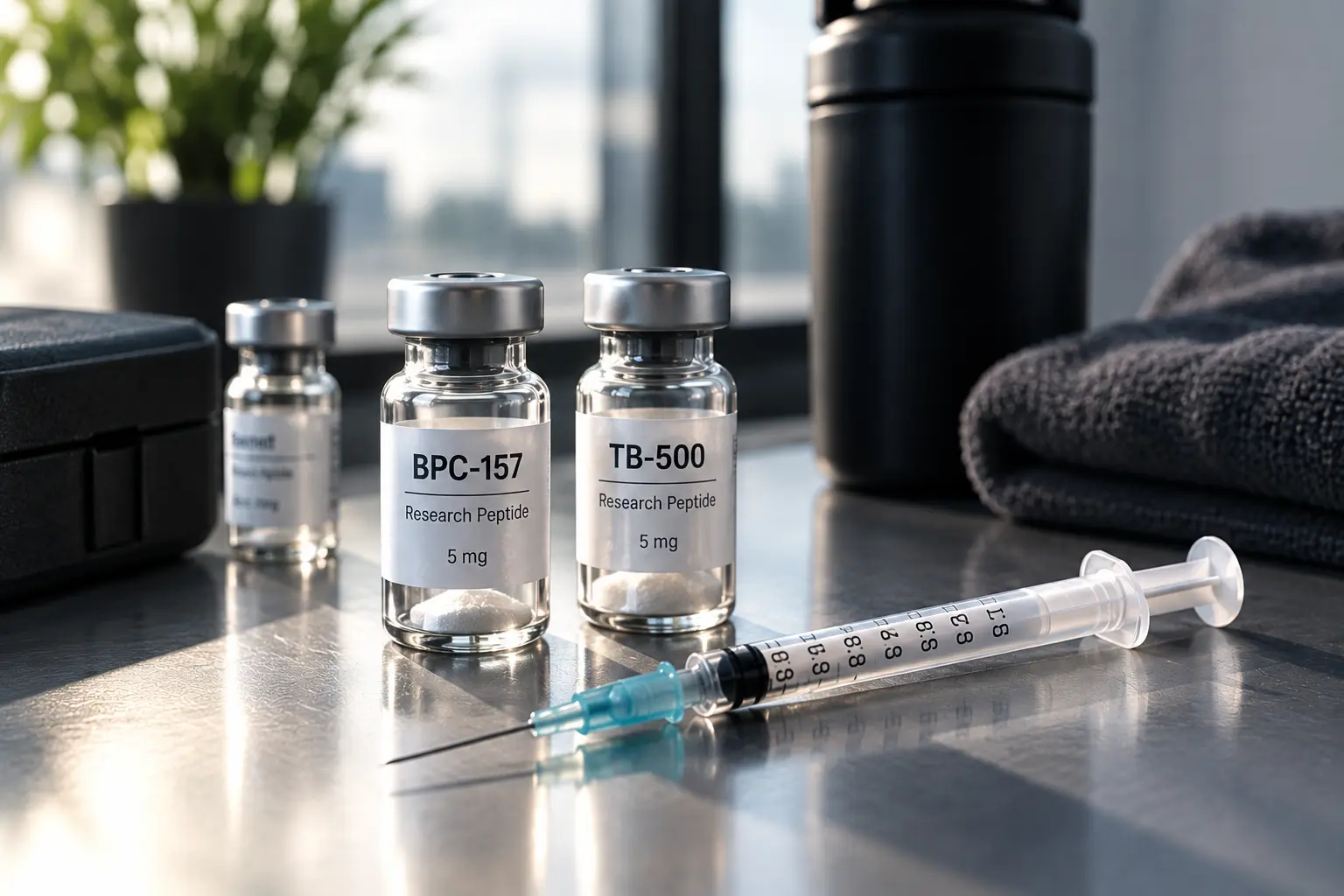
A search for “BPC-157” returns thousands of posts describing near-miraculous tendon repair. Alongside vials sold online labeled “research use only, not for human consumption,” purchased and injected anyway. This gap is the subject of this article. How confidently these compounds are discussed in fitness and wellness spaces, against how little formal evidence exists behind them. It covers what has and has not been studied. It covers why the regulatory category these peptides sit in matters, and where genuine, well-supported peptide therapy exists.
What’s Driving the Surge
Peptide use in fitness and longevity circles has grown rapidly over the past few years. Compounds like BPC-157, TB-500, ipamorelin, and dozens of others are marketed for injury recovery, fat loss, anti-aging, and general performance enhancement. Discussed openly on forums, social media, and at wellness clinics. The appeal is straightforward. They’re framed as targeted, naturally-derived signaling molecules rather than blunt pharmaceuticals, which makes them feel safer than they have been shown to be.
Regulators are struggling to keep pace with this demand. A Pharmacy Compounding Advisory Committee narrowly recommended adding six experimental peptides to a list of substances pharmacies can use in compounded medications. Including BPC-157 and TB-500. The recommendation drew immediate scrutiny. FDA staff had cited insufficient safety and effectiveness evidence for exactly these compounds, and several committee members had financial ties to peptide-related businesses. No final ruling has been made.
The Research Gap, Specifically
BPC-157 is a synthetic peptide based on a fragment of a protein found in gastric juice. It has been studied in animal and cell-based research for tissue repair, gut integrity, and inflammation. This research is genuinely part of why it generates interest. What does not exist is any large-scale, randomized, placebo-controlled clinical trial in humans. The evidence people cite when discussing BPC-157 for tendon healing is, almost without exception, evidence generated in rats.
TB-500, a fragment of thymosin beta-4 studied for its role in cell migration and wound repair, sits in a similar position. When the FDA reviewed it, staff found no human exposure data and no completed animal toxicology program at all. This is a specific, meaningful distinction from a compound that has been tested in humans and found to carry some risk. It is a compound where the basic safety testing that would normally happen before human use simply has not been done.
The Regulatory Category Matters
These compounds are commonly sold labeled “research use only” or “not for human consumption.” This label exists specifically to sidestep the FDA approval process for drugs and the manufacturing standards required for dietary supplements. Neither BPC-157 nor TB-500 can be legally sold as a supplement ingredient in the United States or Canada. Neither is approved as a drug. Canada has specifically advised consumers to avoid both.
The FDA placed BPC-157 in Category 2 of its interim bulk substances list in late 2023. This designation means the agency considers it to potentially present significant safety risks in pharmacy compounding. Separately, the agency has flagged specific concerns tied to compounded, injectable peptides broadly. Immunogenicity risk, aggregation, impurities, and inconsistent product sterility. A product labeled “research chemical” carries none of the quality assurance that even a loosely regulated supplement does. What is in a given vial, at what concentration and purity, is frequently unverified.
What Gets Lost in the Framing
The framing that makes these compounds feel low-risk, naturally-derived, targeted, does not track with what determines safety. A compound can be a naturally-occurring peptide fragment and still carry real risk. Especially when self-administered by injection without dosing standards, purity verification, or the toxicology studies that would normally establish a safe range in humans.
A physician writing publicly about this pattern described a specific, recurring situation. Patients ask about BPC-157 and TB-500 after encountering them on social media or at wellness clinics, expecting accelerated healing and a shortcut back to full function. The available human evidence does not currently support that expectation with any confidence, regardless of how consistently it circulates online. This does not mean the compounds definitely do nothing. It means the evidence needed to know either way, in humans, at the doses people are using, has not been generated.
Where the Evidence Exists
It is worth being precise here, since dismissing peptides as a category would overstate the case in the other direction. Some peptide-based therapies are genuinely well-studied and FDA-approved for specific medical uses. GLP-1 receptor agonists are the clearest example. Backed by large randomized trials for approved indications, prescribed at established doses, manufactured under standard pharmaceutical quality control. Certain growth hormone secretagogues also have real clinical evidence behind them when used under medical supervision for approved purposes.
The distinction that matters is not peptides versus no peptides. It is the gap between a compound tested in human trials, with an established dose and verified manufacturing, and a compound purchased online labeled “not for human consumption.” One based on rat studies and forum consensus. Both categories exist under the umbrella term “peptides.” Conflating them is exactly what makes the second category feel more credible than the evidence supports.
What This Means
Athletes should also be aware that several popular peptides, including BPC-157, are prohibited under the World Anti-Doping Agency’s list of non-approved substances. This adds a compliance risk on top of the safety and purity concerns for anyone competing in tested sport. For coaches and athletes navigating this landscape, the practical distinction worth holding onto isn’t whether a compound sounds promising in early research. Early, non-human research generates hypotheses. It does not establish that something is safe or effective for a person to inject.
The honest position is not that peptides are inherently dangerous or that all research into them is worthless. It is that a large and growing number of people are self-administering injectable compounds with no established human dosing, no verified purity, and no long-term safety data. This is based largely on online anecdote, not anything resembling the evidence base that exists for approved medical treatments. That gap between confidence and evidence is the real story. Worth understanding clearly before deciding what, if anything, to do with it.
References
- Peptides are booming. Does the FDA have a better way to balance access and safety? The Fulcrum. 2026.
- BPC-157: experimental peptide creates risk for athletes. USADA. 2020.
- BPC-157 and TB-500: uses and safety. ConsumerLab.com. 2026.
- BPC-157: a prohibited peptide and an unapproved drug found in health and wellness products. Operation Supplement Safety (OPSS). 2026.
- The peptide gamble: a doctor’s warning on BPC-157 and TB-500. Orthopaedic and Wellness Center. 2026.
Leave a Reply
You must be logged in to post a comment.