
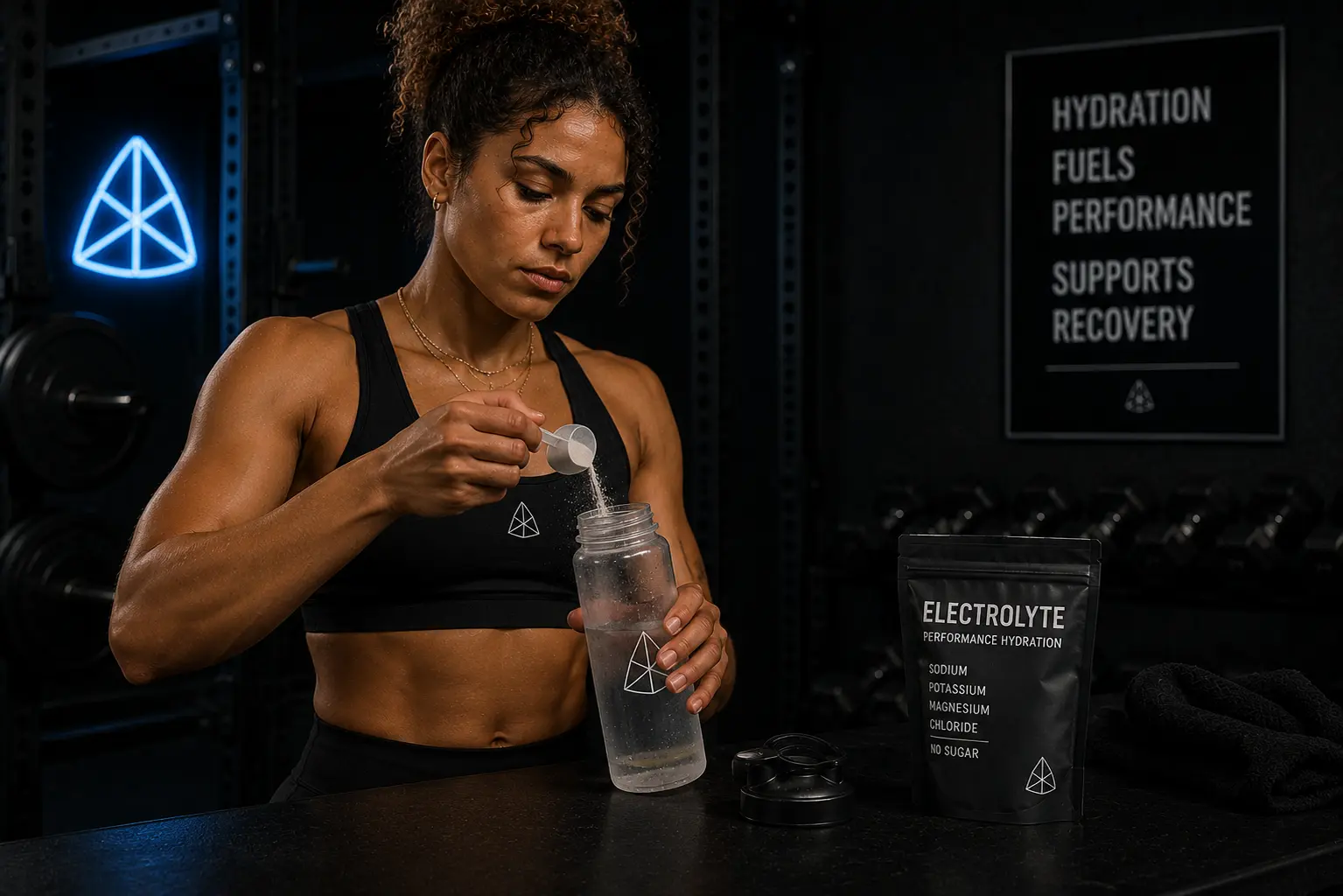
Electrolyte powders have expanded from an endurance-sport product into a general wellness category, positioned as a daily supplement rather than a tool for specific training conditions. This article sets out what electrolytes do, the physiological reason routine supplementation adds little for most people, the conditions under which replacement becomes worthwhile, and where the evidence remains contested even among endurance athletes.
What Electrolytes Do
Electrolytes are charged minerals, principally sodium, potassium, magnesium, and calcium, that the body uses to conduct nerve signals, contract muscle, and regulate fluid distribution. These functions are essential, and a clinical electrolyte imbalance is a genuine medical concern.
The relevant question for supplementation is not whether these minerals matter, but whether a given person is short of them. For most people eating a varied diet, they are not. Sodium in particular is abundant in typical diets, more often consumed in excess than in deficit. An essential nutrient present in adequate amounts does not become more useful by adding more of it.
Why Routine Supplementation Adds Little
Sodium balance is regulated continuously by the kidneys, which excrete more when intake is high and conserve more when intake is low. This system maintains balance across a wide range of dietary intakes, including low ones. The body also stores and releases sodium from soft tissue and bone, buffering short-term variation.
For someone not losing large volumes of sweat, these mechanisms mean supplemental electrolytes correct a deficit that generally is not present; the surplus is excreted. This is the physiological basis for treating daily electrolyte intake, absent significant sweat loss, as unnecessary rather than beneficial.
When Replacement Becomes Worthwhile
The case for replacement is built on sweat loss, and it is legitimate within its range. Exercise beyond roughly 60 to 90 minutes, in heat, or at a high sweat rate produces fluid and sodium losses that diet and water may not replace quickly enough during the activity itself.
Sweat sodium concentration varies substantially between individuals, from around 10 to 90 mmol per litre. Those at the high end, sometimes visible as salt residue on skin and clothing, lose more sodium per litre and have a stronger case for replacement than those at the low end. At the upper range of sweat rates, endurance athletes can lose one to three litres per hour, carrying several hundred to over a thousand milligrams of sodium.
This defines the population the original electrolyte research addressed: those training or competing for extended periods, or in heat. Public health guidance recommending low sodium intake is aimed at the general population, not at people with large acute sweat losses; the two apply to different physiological situations, which is the source of much of the confusion in how these products are marketed.
The Contested Ground Within Endurance Sport
Even where the case is strongest, the evidence is more mixed than product claims suggest. Two beliefs are worth examining specifically.
The first is that electrolyte intake prevents muscle cramps. Most controlled studies find no clear association between sodium intake and cramping. Exercise-associated muscle cramps appear to involve altered neuromuscular control rather than electrolyte depletion alone, which is consistent with the observation that supplementation has not reliably prevented them.
The second concerns exercise-associated hyponatremia, a dangerously low blood sodium concentration during prolonged exercise. The intuitive assumption is that it results from insufficient sodium and is prevented by supplementing it. The evidence points to overdrinking plain water as the primary driver: large fluid volumes dilute blood sodium faster than sweat losses alone, and sodium supplementation does not reliably offset this when overdrinking continues. Drinking to thirst is the more effective safeguard. This reframes the condition as a fluid-balance problem rather than a sodium-deficiency one, which changes what actually reduces the risk.
Practical Implications for Coaches
The decision to use electrolytes should follow from the demands of the session and the individual, not from a general recommendation carried over from ultra-endurance contexts. The relevant variables are session duration, environmental heat, and the athlete’s sweat rate and sweat sodium concentration.
For sessions under roughly an hour in moderate conditions, water and normal diet are sufficient. As duration, heat, and sweat losses rise, replacement moves from unnecessary to worthwhile, with the threshold depending on the individual athlete. For athletes competing in long or hot events, the more useful intervention is often managing fluid intake to thirst rather than maximising sodium, given the role of overdrinking in hyponatremia. Matching the strategy to the actual demand is the practical skill here, and it is one that generalises across most nutrition decisions in training.
References
- Veniamakis E, Kaprara A, Anastasiou C, et al. Effects of sodium intake on health and performance in endurance and ultra-endurance sports. Int J Environ Res Public Health. 2022;19(6):3651. DOI: 10.3390/ijerph19063651. PMC: PMC8955583
- Hoffman MD, Stuempfle KJ. Sodium supplementation and exercise-associated hyponatremia during prolonged exercise. Res Sports Med. 2021. PMC: PMC7886928
- Hew-Butler T, Loi V, Pani A, Rosner MH. Statement of the Third International Exercise-Associated Hyponatremia Consensus Development Conference. Clin J Sport Med. 2015;25(4):303-320. DOI: 10.1097/JSM.0000000000000221. PMID: 26102445
- Schwellnus MP. Cause of exercise associated muscle cramps (EAMC): altered neuromuscular control, dehydration or electrolyte depletion? Br J Sports Med. 2009;43(6):401-408. DOI: 10.1136/bjsm.2008.050401. PMID: 18981039
- McDermott BP, Anderson SA, Armstrong LE, et al. National Athletic Trainers’ Association position statement: fluid replacement for the physically active. J Athl Train. 2017;52(9):877-895. DOI: 10.4085/1062-6050-52.9.02. PMID: 28985128
Leave a Reply
You must be logged in to post a comment.